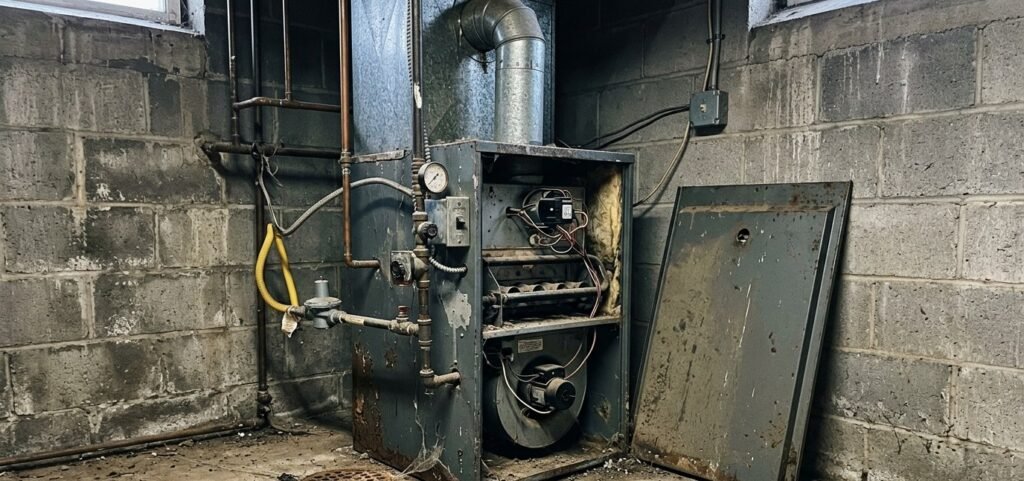
Furnaces give notice. Not much, and not politely, but they do. Every October I get calls that could have been September calls, and the difference is usually that somebody noticed something in August and decided it was nothing.
Here is what to listen and look for.
1. It takes two or three tries to light
You hear the click, the blower starts, then nothing. It tries again. On the third go it catches.
That is a dirty flame sensor about eighty per cent of the time. It is a fifteen minute job. The other twenty per cent is an ignitor on its way out, which is also cheap now and expensive at eleven at night in January.
2. The blower runs after the burner stops, and keeps running
A normal furnace runs the fan for a minute or two after the flame goes out. That is on purpose. If it runs for ten minutes, or never stops, the limit switch is tripping because the unit is overheating.
Overheating usually means restricted airflow. Change the filter first. If that does not fix it, call somebody, because a furnace that keeps hitting its high limit is stressing the heat exchanger every single cycle.
3. Rust or soot around the burner compartment
Open the panel and look. Flaky orange on the metal, or black powder where there should not be any.
Rust means condensation somewhere it does not belong. Soot means incomplete combustion. Neither is a wait and see item.
4. The flame is yellow
It should be blue and steady. A yellow, lazy, flickering flame means the burner is not getting enough air, or is getting something into it that should not be there.
This one gets its own paragraph for a reason. Incomplete combustion produces carbon monoxide. If you have a yellow flame and no CO detector on that floor, buy a detector today and call somebody this week.
5. The bill went up and nothing else changed
Same weather, same thermostat setting, same house, more gas. Efficiency does not fall off a cliff, it slides. A furnace running at seventy per cent instead of eighty five will heat your house, and it will charge you for the difference every month until somebody measures it.
I measure combustion efficiency on every maintenance visit for this reason. It is the one number that tells you what is happening inside the unit without taking anything apart.
What I would actually do
If you have one of these, book something in September. If you have the yellow flame, do not wait for September.
And if your furnace is over eighteen years old and showing two or three of these at once, get somebody to look at the heat exchanger before you spend money on repairs. There is a point where the right answer is replacement, and I would rather tell you that in the autumn than in the middle of a cold snap when your options are worse.